Why We Built The Studio
We built Anagram Studio because marketers kept asking us to build one-off AI experiences, and we realized the real product wasn't any single tool, it was giving them the building blocks to launch their own ideas in an afternoon and learn from them.

The Product We Thought We Were Building
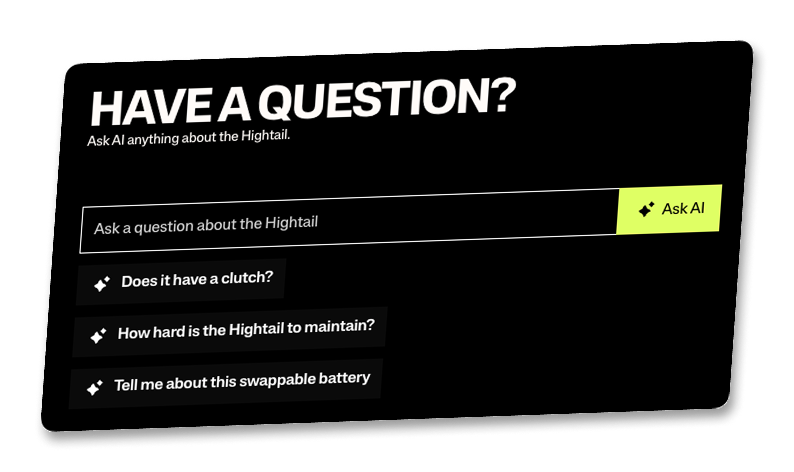
We launched Product Expert and it hit immediately. Customers got answers on-site instead of heading to Google (where competitors poach them). Support tickets dipped and conversion went up. We thought our lane was “AI product experts.”
Then the requests started rolling in…
"What about a back-to-school backpack recommender?"
"Can you build a pizza recipe generator for an upcoming launch we have. That’d be really cool!"
"We need to collect leads and send them to our system."
"If a customer support question can't be answered, can it ask for their email and route it to our CS team?"
At first, these felt like distractions. Customers still loved Product Expert. They were using it, seeing results, recommending it to others. But the new requests sat outside what Product Expert was built to do. They wanted us to build all these other AI experiences on the side, ones that seemed unrelated to our core value at the time.
The Pattern We Couldn't Ignore
The requests kept coming, and not just from e-commerce brands. A real estate company needed a property recommender for their listings site. A local landscaping company wanted to show prospects what their landscape could look like with new lighting — and capture the lead while they were excited.
Each request was specific, often one-off, and almost always urgent. These marketers had ideas, good ideas, but no way to execute them.
Here's what we learned: marketers are full of ideas, but they’re bottlenecked by execution.
They have creative instincts, and carry a backlog of ideas they’d love to build. But they rarely get the opportunity to.
When it comes to implementation, they hit a wall. If they have a dev team, that team’s buried in roadmaps, sprints, and priorities that rarely include “try something new for marketing.”If they turn to no-code tools: those tools sound simple, but still require a level of technical comfort most marketers don’t want to be bogged down with. They just want an easy way to turn their ideas into reality, and a way to see if it’s working, to learn from it, and extract insights they can build on.
The Studio
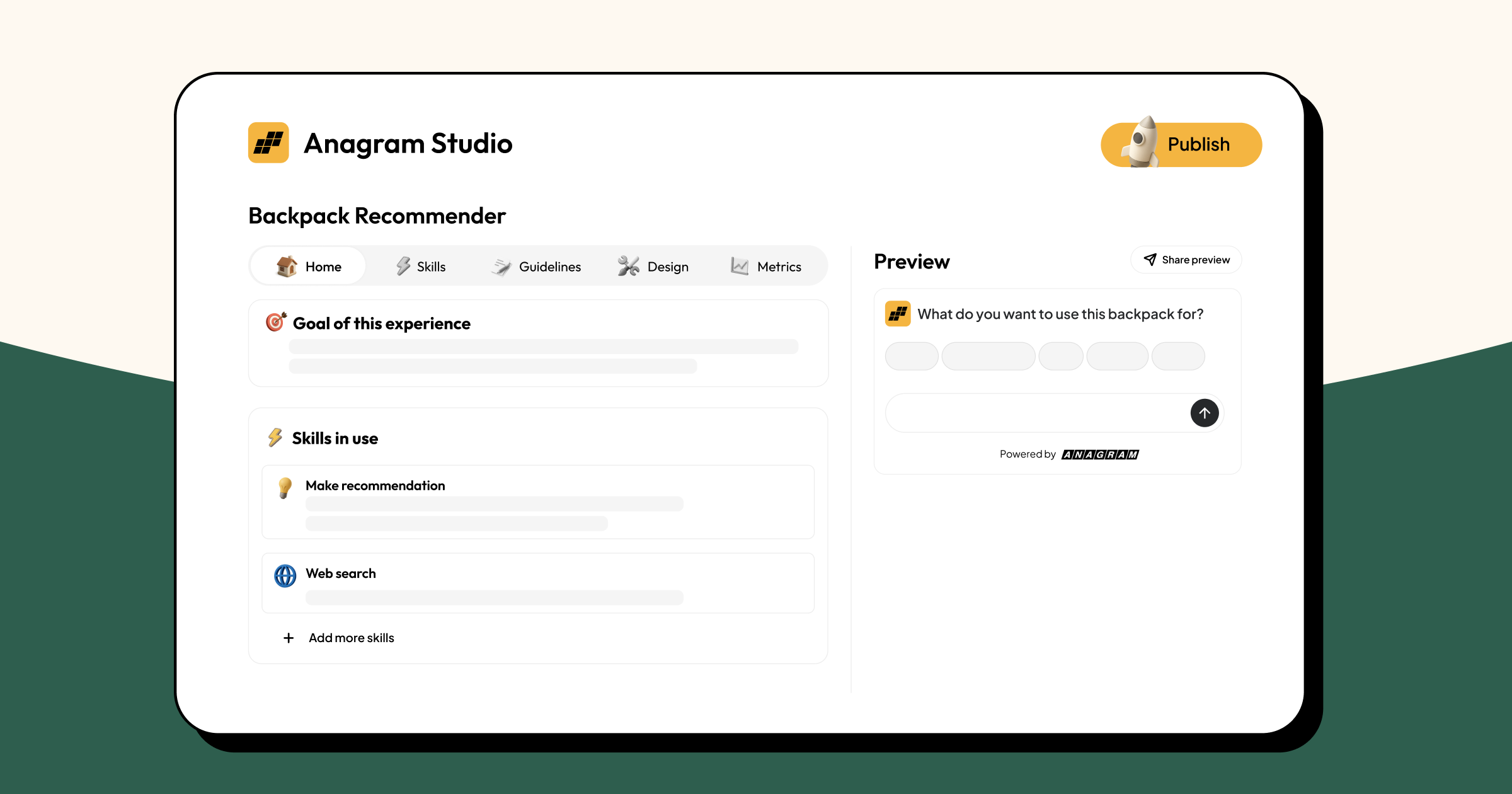
We realized the “one-offs” weren't the problem. They were the product.
But we weren't going to build a custom AI widget for every request. Instead, we needed to build the way LEGO builds — not by making every possible castle, but by making the bricks people need to build any castle they can imagine.
That's Anagram Studio: composable Skills that snap together. The landscaping company's lighting visualizer? That's Generate Image + Qualify Lead + Send to Google Sheet. The backpack recommender? That’s Search Catalog + Recommend Products.
Each Skill does one thing well. But combined, they handle whatever idea you walked in with this morning.
The interface? As simple as Canva. Enable the Skills you need, tell the AI what you're trying to do in plain English, preview it, publish it. No code. No debugging. No ticket to engineering.
From Idea to Insight
Sarah's got an idea Tuesday morning: a lead qualifier that talks to prospects, figures out what they actually need, and routes them to the right place.
By Tuesday afternoon, she's built it in Studio: enabled the skills, told the AI how to handle the conversation, sent a preview to her team for review. She drops it on the pricing page and publishes before dinner. No engineering ticket. No waiting.
Within 24 hours, she checks the numbers. Forty conversations. Twelve qualified leads ready to follow up. Everyone else got pointed to the getting-started docs to self-serve.
Next Tuesday, Anagram surfaces something she didn't expect: prospects who mention they've tried a solution before and it failed are closing at roughly 3× the rate, even when they seem less qualified on paper. The signal's based on 18 closed deals from last week, tracked from conversation to close. They're more motivated, more bought-in, and they convert faster.
She just discovered what actually qualifies a lead for her business. Not from a spreadsheet or a hunch, but from real conversations.
That's what changes with Studio. You don't just ship ideas. You learn from them.

From Thorn to Lifeblood
One-offs used to feel like distractions. Now they're our lifeblood.
At first, every request that fell outside Product Expert's scope felt like a detour. Recipe generators, lighting visualizers, backpack recommenders… they wanted us to build all these other things.
But each "Can you build X?" was really saying the same thing: "I have an idea I want to try, and I can't."
We realized the one-offs weren't the problem. The execution gap was. Studio fixes that. Now when a marketer has an idea, they can just launch it.
What Changes
You stop waiting for dev cycles. You stop explaining the idea in Slack threads, hoping someone has time to build it. You stop watching competitors ship the thing you thought of three months ago.
You walk into meetings with live experiences, not mockups. With real metrics, not projections. With insights extracted from actual customer conversations, not assumptions.
You stop pitching ideas. You start launching them.
That idea you've been sitting on? Launch it this afternoon.
Start building with Anagram