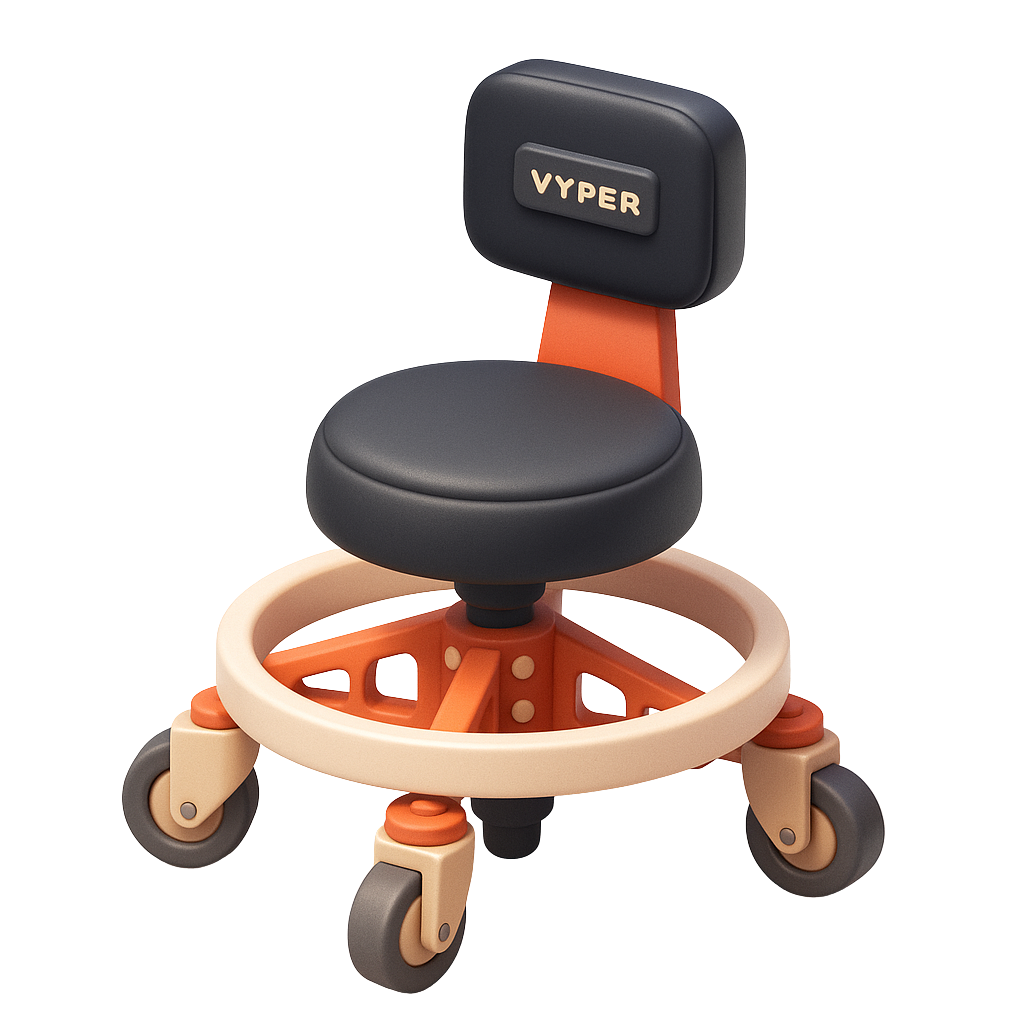
Vyper Industrial and building things right, right in America.
Vyper Industrial proves that building with integrity never goes out of style. Founded by two brothers in Wisconsin, the company set out to create shop chairs that are durable, safe, and proudly made in the USA long before it became a trend.

This is a story about a company I absolutely love, Vyper Industrial. But first, tariffs and supply chains. Recent tariffs have created some serious stress for commerce brands in America. We hear about it on calls with our partners almost everyday. While clearly disruptive, tariffs have also raised a much needed (and sometimes uncomfortable) examination of where and how the goods we use daily are actually made. If you’ve spent any time in consumer products, you know that supply chains are complex and that all manufacturing decisions require some tradeoffs. Cost, speed, materials, labor conditions, shipping, and consumer preferences are all part of a delicate balancing act for brands. ‘Made in USA’ is having a bit of a moment now, but for Green Bay, Wisconsin-based Vyper Industrial, the commitment to American manufacturing has always been the foundation.
According to e‑commerce analysts SmartScout, discovery searches like “made in USA products only” are up 220% year over year, while listings with “Made in USA” have surged too (Source: DigiDay). Meanwhile, Google Trends data confirms that search interest in “made in USA” has roughly doubled since the start of 2025, with 43 percent of Americans saying their interest in domestic products has grown
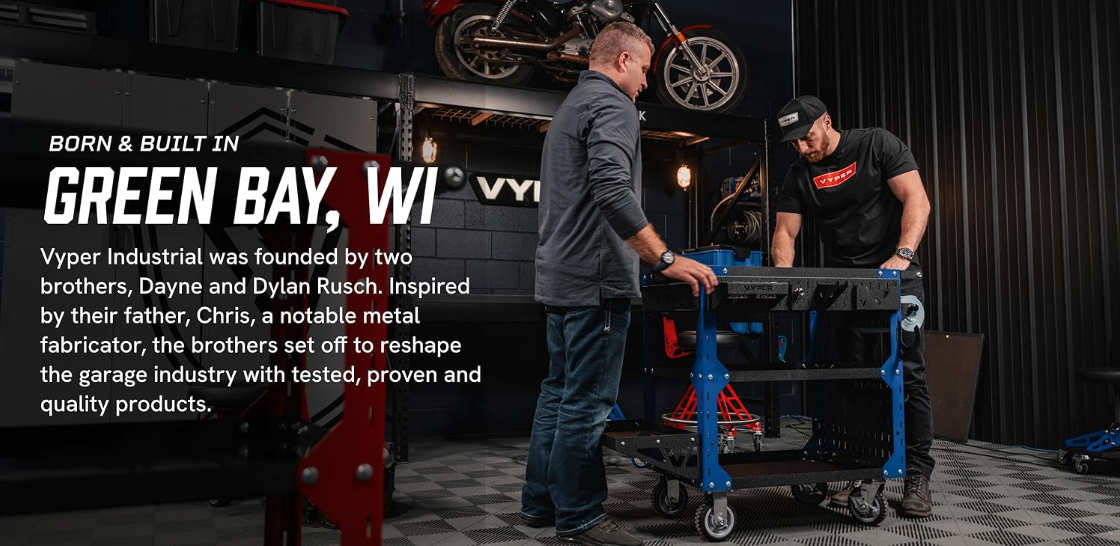
While tariffs dominate headlines, many brands have struggled to redesign supply chains and find USA suppliers and factories. Dayne and Dylan Rusch made that choice long before it became a trend. Raised in Wisconsin, their values were forged in their dad’s garage. They grew up helping him work on projects like a Pietenpol airplane and a 1967 Nova. The one thing that always stood out was how poorly their Dad’s shop stool held up. It was cheap, uncomfortable, and probably unsafe too. In a World with way too much poorly made junk, they knew they could do better.
In 2019, Dayne started a small electrical motor business from his 400 square foot apartment just to keep up with the bills. Rising shipping costs made that business increasingly difficult. Instead of walking away, the brothers took that frustration and created something new. In 2020, they launched the Vyper Chair, designed to solve the problem they knew well: a shop chair that could stand up to real work, with the features that addressed all the pain points (figuratively and literally).
From day one, every part of the business was built in the United States and materials were sourced from local companies. Growth came quickly, moving from a small shop to larger facilities, and by 2024, Vyper ranked as the second fastest growing company in the Midwest on the Inc. 5000 list.
The story of Vyper is not about reacting to tariffs, and this post is not actually about supply chains but about a business founded on real values, like durability, trust, and quality. Today’s shoppers are not looking just for the lowest price. They want brands that build things to last and stand for something too.
At Anagram, we believe those are the stories worth amplifying. Vyper Industrial is proof that when you build with integrity, good things happen.
By Austin Winfield (Co-Founder at Anagram)