HOW TO GET YOUR PRODUCTS TO RANK IN LLM AND AI SEARCHES
How to Get Your Brand’s Products to Rank in LLM and AI Search. A simple guide to GEO/LLMO

How to Get Your Brand’s Products to Rank in LLM and AI Search
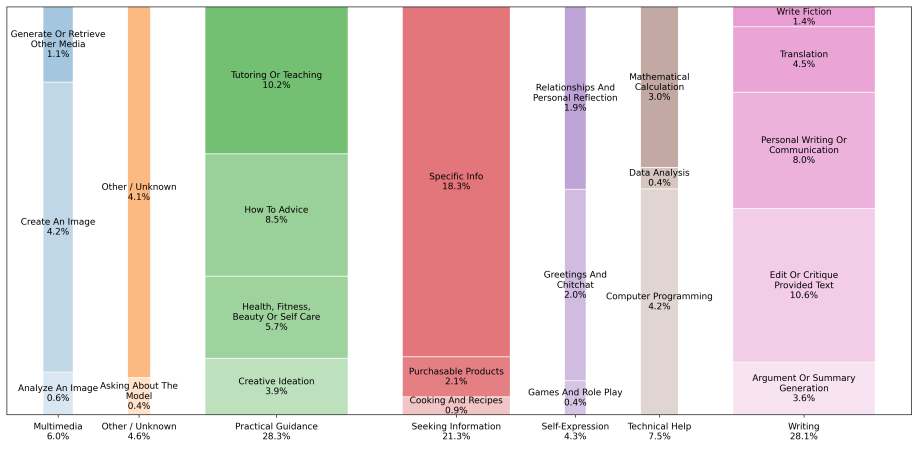
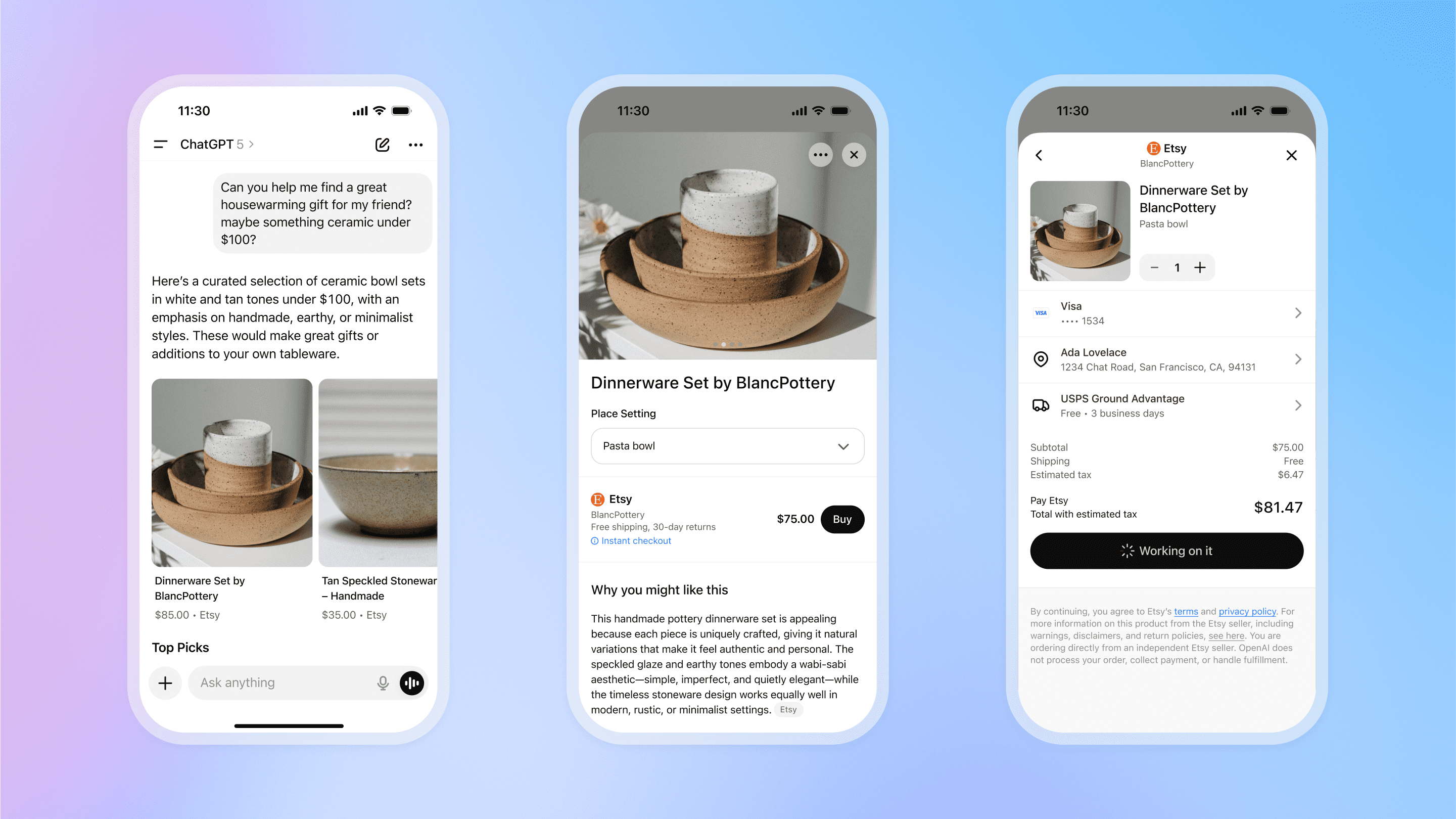
OpenAI has published, for the first time, detailed insights into what users are asking ChatGPT. Only 2.1% of those questions involve purchasable products, yet the commercial implications are enormous given ChatGPT’s scale of roughly 2.5 billion daily queries as of October 2025. The trend will intensify with OpenAI’s latest update: both Etsy and Shopify checkouts will soon be enabled directly within ChatGPT conversations, which has potential to remove even more friction discovery and purchase.
Taking a step back, it all makes pretty simple sense; shoppers are and will continue to ask AI platforms like ChatGPT, Perplexity, and Gemini for product recommendations they would've gone to Google for previously. The key difference (and the whole point of this post) is that these models often name specific products or brands directly in their answers. If your brand is not showing up there, you are missing visibility, demand, and sales.
This following guide shares some practical, actionable steps to help your commerce brand’s products get recognized and ranked in LLM-powered search results.
Why It Matters: From Clicks to Citations
Here is what has changed and why it matters.
LLMs often answer questions directly instead of sending users to web links.
Even if your product page ranks on Google, users may never click through because the AI already summarized other products.
Getting mentioned in AI answers builds trust and awareness. It can also create future search demand for your brand. So it’s important even if that shopper doesn't buy immediately.
Small wording choices and content decisions can increase the chance that an AI model recommends it.
LLM optimization, sometimes called “LLMO” or “GEO,” overlaps with good SEO with a few distinctions we’ll cover below.
If you’re running a commerce brand today, your goal is not just to rank. It is to become a reputable, easy-to-cite reference in your category.
Step 1: Structure Your Product Pages for AI
First, let’s chat product pages. Make your product pages easy for AI systems to read and understand.
Use schema markup such as Product, Offer, and Review. This gives AIs a clear signal that your page describes a product.
Use clear headings and short paragraphs so AI can extract relevant text easily.
Use Anagram-powered FAQs with add 1-Click questions with questions like “What problem does this solve?” or “How do I choose the right version?” map directly to how people phrase AI prompts.
Include comparison tables for your products. LLMs often rely on structured data when making recommendations.
Explain your testing or methodology if you compare models or versions. Transparency builds credibility.
Use consistent language and categories that match industry standards. Avoid invented product labels that AIs will not recognize.
When your content is organized clearly, it becomes easier for an AI to parse and cite.
Step 2: Create Content Designed for Citation
Develop content that AIs are likely to draw from when answering questions. Since Anagram already has context on all of your products, it’s the best place to start. Plus, we have killer templates for all of the ideas below.
Write “best of” or comparison articles that include your products with clear reasons and details.
Publish how-to guides and buying guides that solve common user problems.
Share original data or case studies that provide trustworthy evidence.
Build small tools or calculators related to your products. AI often cites interactive or functional pages.
Repost any mentions in external publications such as product roundups or trade articles on your own company blog page.
Republish all of your blog content on platforms like Medium and Substack, always linking back to your main site.
Your aim is to be sourceable. The more often your brand appears in credible text online, the more likely an AI will surface it.
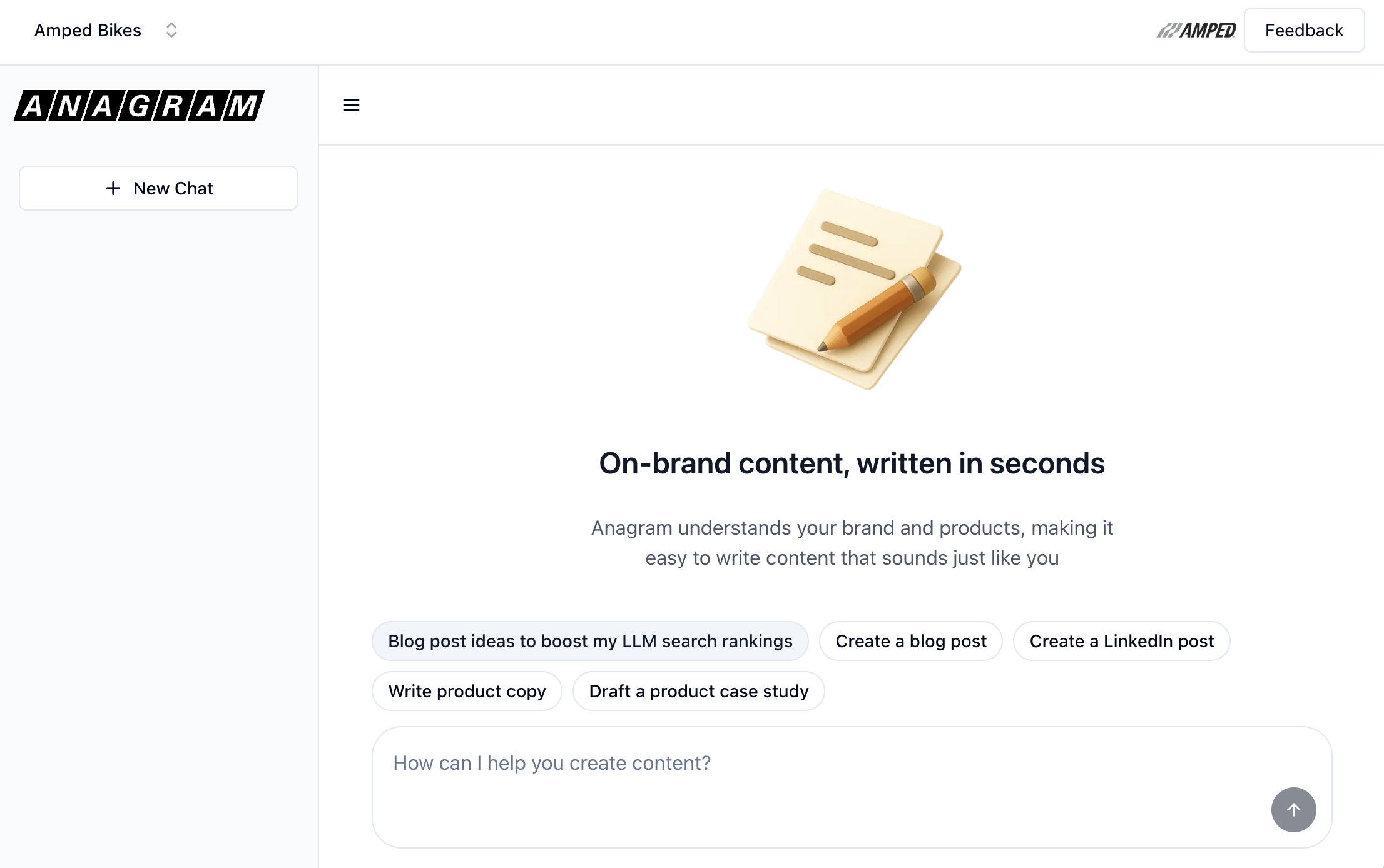
Bonus: Anagram can help you brainstorm content ideas optimized for LLM-search. On the content creation tab, click “Blog post ideas to boost my LLM search rankings”.
Step 3: Seed Your Brand Across the Web
“LLM seeding” means placing your brand in places where AIs (LLMs) look for trusted information.
Get listed in round-up posts, buyer’s guides, or review articles. Super niche industry publications can still be super powerful, even if they are small.
Encourage customer reviews and testimonials on public forums - not just your own site.
Secure press mentions and interviews in relevant publications.
Test the use of a strategic text sequence (STS): a short, natural sentence in your product copy that subtly describes your brand’s strengths.
Analyze which pages are cited for your competitors and target similar placements.
Use PR outreach and guest content to expand the range of your brand mentions online.
Post on Reddit and other forums.
These citations signal that your brand exists, is active, and is credible within its category.
Step 4: Write for Conversational Search Intent
AI search queries often sound like real conversations, so your content should reflect that. If you’re creating content in Anagram, we can help you do this automatically.
Use question-style headings such as “What’s the difference between Model A and Model B?”
Write in natural and specific language rather than keyword-stuffed text.
Address long-tail questions such as “best tent for high wind camping under $300.”
Study the phrasing that AIs use in your niche and align your copy with it.
Refresh and update your content regularly to signal relevance.
The closer your language matches the way users ask questions, the more likely AI will connect your product to those queries.
Step 5: Monitor and Measure AI Visibility
You can track how well your brand appears in AI search results, and the truth is you don’t need fancy tools to do it.
Ask AI tools like ChatGPT or Perplexity the same product questions regularly and record mentions.
Check “AI Overview” or “About this answer” sections in search engines to see which pages they cite.
Track branded search volume to measure growing awareness.
Compare your visibility against competitors and analyze what structures or phrases help them appear.
Test micro changes to phrasing or structure and note whether they improve mentions.
This process helps you refine your strategy over time based on real data.
Step 6: Invest and Maintain Core SEO and Brand Authority
Traditional SEO strategies still play an important role in an LLM world. All of those cool moves you made in the past still help.
Keep your site technically optimized with fast load times, good mobile usability, and correct indexing.
Earn quality backlinks and maintain strong domain authority.
Use internal linking to reinforce topic clusters and hierarchy.
Continue promotion and outreach so your content gets discovered by crawlers.
Strengthen brand signals such as reviews, partnerships, and media mentions.
A foundation of credibility and performance will make every other tactic more effective.
A 90-Day Roadmap (Email Us and We’ll Build you a Custom Plan)
Weeks 1–4
Audit and foundation
Audit your product pages for schema, structure, and clarity. Add FAQ sections. Identify top buyer questions.
Weeks 5–8
Content and seeding
Use Anagram to write two comparison or buying-guide articles. Reach out for inclusion in relevant roundups. Republish summaries on Medium.
Weeks 9–12
Monitor and refine
Test AI prompts weekly. Log mentions. Encourage more public reviews. Adjust phrasing or layout based on results.
Common Mistakes to Avoid
Avoid forced keyword tactics or unnatural text patterns.
Do not overuse experimental tricks like STS. They can look manipulative.
Understand that AI models evolve frequently, so flexibility is essential.
Not every model indexes open web pages immediately, so patience is required.
Never sacrifice user experience for optimization. When an AI does send traffic your way, you want visitors to stay.
Conclusion
Ranking in LLM and AI search is about becoming a trusted, clearly written, and widely cited resource.
Combine three principles:
Clear structure and metadata.
Authoritative and helpful content. Anagram can help here!
Consistent visibility through external mentions and partnerships.
The brands that adapt early will be the ones that AIs mention first. Have more questions? Want to build a custom plan for your brand? Email me at Austin@anagram.ai and we’ll get you started.