What Is a Good ChatGPT Visibility Score? DTC Benchmarks for 2026
A practical benchmark guide for DTC brands measuring ChatGPT visibility, including score ranges, prompt sampling, mention and citation metrics, and what to do in the first 30 days.

What Is a Good ChatGPT Visibility Score? DTC Benchmarks for 2026
By Zach Luker - GEO Researcher
Published July 25, 2026 · Last updated July 25, 2026
TL;DR
A good ChatGPT visibility score for a DTC brand is usually not one universal number. Treat 25-50 as early traction, 50-70 as competitive, and 70+ as category leadership inside a defined prompt set. The better benchmark is whether your score is improving against the competitors shoppers ask ChatGPT to compare.
What is a good ChatGPT visibility score in 2026?
A good ChatGPT visibility score is one that shows your brand appears consistently for the prompts that shape purchase decisions. For most DTC brands, a score above 50 in a tightly defined prompt set is useful. Above 70 usually means the brand is becoming a category default in AI answers.
The important caveat is that AI visibility scores are tool-specific. Semrush describes AI Visibility as a 0-100 benchmark score showing how often a brand appears in AI-generated answers compared with competitors. Other GEO tools may weight mentions, citations, sentiment, rank position, or prompt value differently.
That means a score only matters when you know three things: which prompts were tested, which competitors were included, and which AI systems were sampled. A beauty brand at 42 for "best scalp serum for postpartum hair loss" may be in a better position than a supplement brand at 68 across low-intent informational prompts.
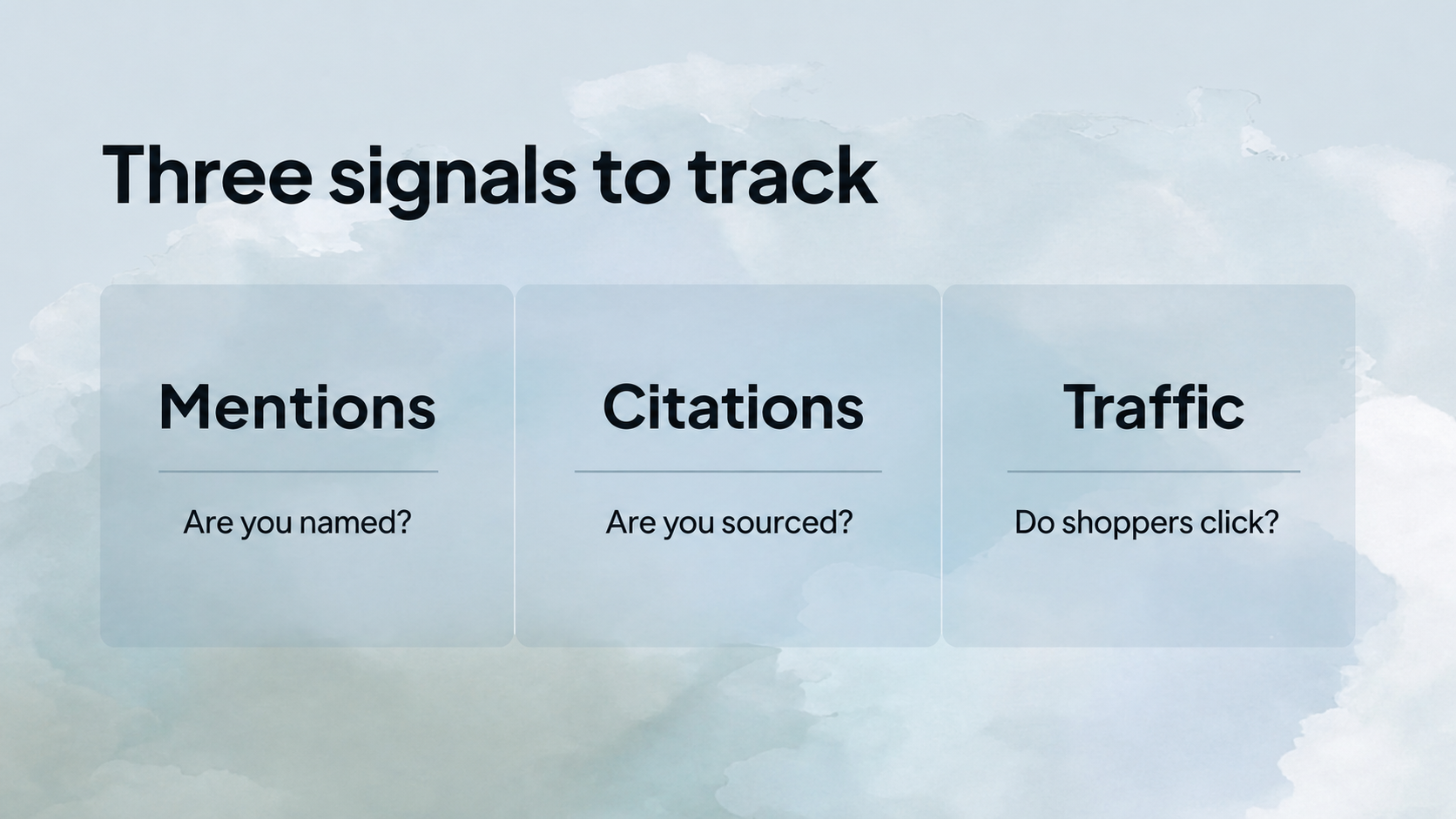
Use score bands as operating ranges, not universal industry averages.
Score range | What it usually means | What to do next |
|---|---|---|
0-10 | Not visible. ChatGPT rarely names or cites you. | Fix crawlability, product content, comparison pages, and off-site mentions. |
10-25 | Early signal. You appear in some branded or narrow prompts. | Build answerable pages for high-intent category questions. |
25-50 | Emerging. ChatGPT can find you, but competitors still frame the category. | Improve source quality, product data, reviews, FAQs, and competitor comparisons. |
50-70 | Competitive. You appear often enough to influence AI-assisted discovery. | Expand prompt coverage and improve citation-worthy pages. |
70+ | Category leader. You are often named in the answers that matter. | Defend share of voice, update sources, and monitor sentiment drift. |
How visible should my brand be in ChatGPT?
Your brand should be visible for the prompts shoppers ask before they choose a product, not every prompt in your category. A DTC brand should start by measuring 20-50 prompts across comparison, recommendation, problem-aware, ingredient, use-case, and alternative-product queries.
ChatGPT visibility has commercial value because AI search is becoming a shopping behavior. Adobe Analytics found that U.S. retail traffic from generative AI sources rose 1,200% in February 2025 compared with July 2024, based on more than 1 trillion retail visits. Adobe also found 39% of surveyed consumers had used generative AI for online shopping.
Traffic volume is still small, so a low referral number does not mean your brand is invisible. A Marketing Science study of 973 ecommerce websites found organic LLM traffic was less than 0.2% of visits, while ChatGPT accounted for over 90% of observed LLM sessions. The visibility problem usually appears before the analytics problem.
What should a ChatGPT visibility score measure?
A useful ChatGPT visibility score should measure mentions, citations, answer position, competitor share, prompt intent, and whether shoppers click through. Mentions show whether ChatGPT names you. Citations show whether it trusts your pages as sources. Traffic shows whether visibility turns into measurable demand.
Semrush separates these ideas in its AI Visibility Toolkit, with metrics for visibility score, mentions, cited pages, citations, monthly audience, share of voice, sentiment, and prompt-level gaps. That is the right framing. A single score is useful only if it can be decomposed into the signals behind it.
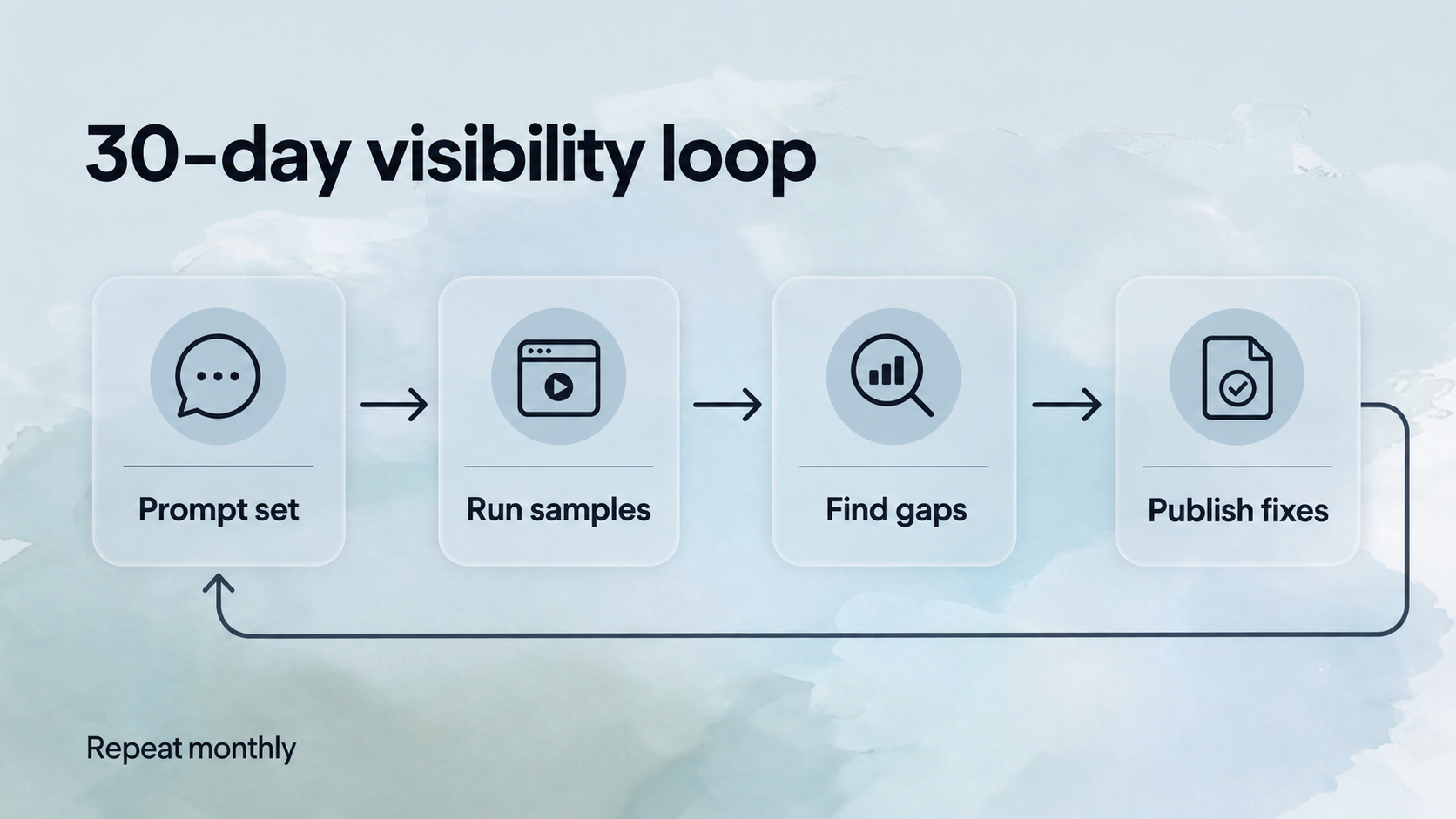
AI visibility is broader than referral traffic. Mentions and citations usually move first.
Metric | Question it answers | Why it matters |
|---|---|---|
Prompt coverage | Which prompts mention the brand? | Shows where the brand is part of the answer set. |
Share of voice | How often do competitors appear instead? | Shows whether you are gaining or losing category presence. |
Citations | Which pages does ChatGPT use as sources? | Shows whether your content is trusted enough to support the answer. |
Answer position | Are you first, buried, or listed as an alternative? | Shows whether the mention is likely to shape a shopper's decision. |
Sentiment | Is the brand framed favorably? | Shows whether visibility is helping or hurting perception. |
Referral traffic | Do users click through? | Shows when AI visibility becomes measurable demand. |
What is a good benchmark for a small DTC brand?
For a small DTC brand, a good first benchmark is 25+ visibility across a tight set of purchase-intent prompts, with at least a few non-branded mentions and one or more cited pages. Reaching 50+ is a stronger sign that ChatGPT understands the brand beyond its name.
Do not compare a startup to Nike, Sephora, or Amazon. Benchmark against brands shoppers would realistically compare in the same price band, category, ingredient profile, use case, or problem. A good prompt set for a DTC skincare brand is different from a good prompt set for an outdoor gear brand.
Use three groups of prompts:
Category prompts, such as "best electrolyte powder for runners"
Problem prompts, such as "what helps postpartum hair shedding?"
Comparison prompts, such as "brand A vs brand B for sensitive skin"
Why can my ChatGPT visibility score be low even if my SEO is strong?
Your ChatGPT visibility score can be low even with strong SEO because AI systems do not simply copy Google rankings. They synthesize answers from accessible, trusted, structured, and repeated sources. A page can rank well while still failing to answer the exact comparative question a shopper asks ChatGPT.
Gartner predicted traditional search engine volume would drop 25% by 2026 as AI chatbots and virtual agents absorb more queries. Gartner analyst Alan Antin called generative AI tools "substitute answer engines." That shift changes what brands need to measure. Rankings still matter, but they are not the whole distribution channel.
In practice, DTC brands lose ChatGPT visibility for five common reasons: thin product-page copy, weak comparison content, poor crawlability, little off-site discussion, and product data that does not match how shoppers ask questions. The fix is not keyword stuffing. It is making the brand easier to understand, compare, cite, and recommend.
How do I improve my ChatGPT visibility score in 30 days?
To improve a ChatGPT visibility score in 30 days, pick a focused prompt set, run baseline samples, find the missing answers, publish specific fixes, and rerun the same prompts. The goal is not a perfect score. The goal is measurable movement against prompts that could influence revenue.
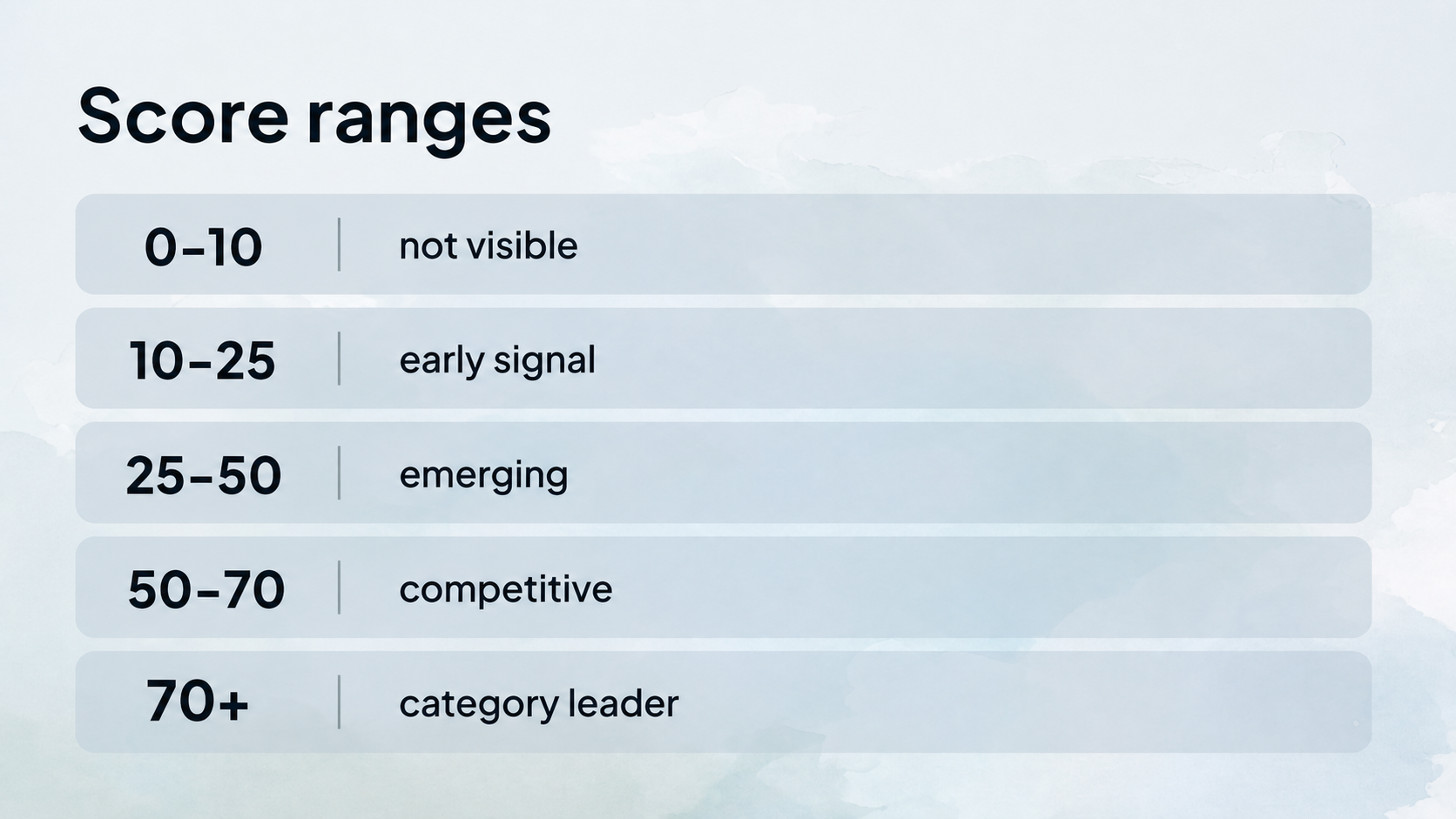
The first month should create a repeatable measurement loop, not a one-time spot check.
Week | Action | Output |
|---|---|---|
Week 1 | Choose 20-50 prompts and 3-5 competitors. | A baseline score and competitor map. |
Week 2 | Review missed prompts and weak citations. | A list of answer gaps and source gaps. |
Week 3 | Publish or update product pages, FAQs, comparison pages, and buying guides. | Better crawlable source material. |
Week 4 | Rerun the same prompt set and compare movement. | A visibility trend you can act on. |
How does Anagram help measure and improve ChatGPT visibility?
Anagram is built around the loop most DTC brands need: see how AI systems talk about the brand, learn what shoppers ask, and improve the content or on-site experience that answers those questions. The useful benchmark is not just a score. It is the next action the score creates.
That matters because ChatGPT visibility has two sides. Off site, brands need to know whether AI systems mention and cite them. On site, brands need to answer the questions shoppers still ask after they arrive. Anagram connects those jobs through AI visibility tracking, shopper question data, and on-site AI experiences.
Public Anagram examples show why this matters operationally. Anagram reports that Bote decreased traditional customer support contacts by 36%, Dakine engaged more than 25,000 shoppers, and Elan Pure raised conversion rates to 13% with Anagram-assisted sessions. Those are not universal benchmarks. They are examples of the outcome metrics to connect to visibility work.
Frequently asked questions
Is 100 a realistic ChatGPT visibility score?
A 100 score is rarely the right target. It usually means you are measuring a very narrow prompt set or a highly branded query set. For most DTC brands, improving from 15 to 35 on revenue-relevant prompts is more meaningful than chasing a perfect number.
How many prompts should I track?
Start with 20-50 prompts. Include category, comparison, problem, product-recommendation, and branded prompts. A smaller prompt set is easier to review weekly. Expand only after you understand which prompts actually connect to customer questions and buying decisions.
Should I track ChatGPT only or all AI engines?
Track ChatGPT first if your question is specifically about ChatGPT visibility, then add Perplexity, Gemini, AI Mode, and Claude if your audience uses them. Search Engine Land reported that Previsible analyzed 6.77 million LLM-driven sessions and found ChatGPT drove 92.4% of AI referral traffic in that dataset.
Can referral traffic prove my AI visibility is working?
Referral traffic is useful, but it is a lagging signal. Mentions, citations, and answer position often move before clicks show up in analytics. Adobe found generative AI retail visitors had 8% higher engagement, 12% more pages per visit, and a 23% lower bounce rate than non-AI traffic, but traffic volume remains early.
What is the first thing I should fix if my score is low?
Fix the prompts where ChatGPT names a competitor but not you. Those gaps usually point to missing comparison pages, unclear product positioning, thin FAQs, poor product data, or weak third-party sources. One good answer page can improve several adjacent prompts.
Next steps
Build a focused prompt set, run a baseline, and look for the prompts where competitors appear and your brand is missing. Anagram can help DTC teams turn that baseline into a practical visibility report and a list of content or on-site fixes.