Does ChatGPT Traffic Convert Better? Why AI Sends Fewer but Higher-Intent Visitors in 2026
A data-backed look at why AI referral traffic is still small, why ChatGPT visitors can be more qualified, and what DTC brands should fix before that traffic reaches product pages.

Does ChatGPT Traffic Convert Better? Why AI Sends Fewer but Higher-Intent Visitors in 2026
By Zach Luker - GEO Researcher
Published July 29, 2026. Last updated July 29, 2026.
TL;DR
ChatGPT traffic is still small, but it can be unusually qualified because the shopper often researches, compares, and narrows options before clicking. Public data shows AI-referred retail visitors browse more pages and bounce less, while ecommerce conversion still trails most traditional channels. Treat AI traffic as high-intent, not high-volume.
Does ChatGPT traffic convert better?
ChatGPT traffic can convert better than some low-intent channels, but the honest answer is mixed. Large ecommerce research shows organic LLM traffic converts above paid social but below most traditional channels. Adobe's retail data also shows AI visitors engage more deeply once they reach the site.
The cleanest read is this: AI traffic is a small channel with stronger consideration signals. A visitor who arrives from ChatGPT has usually asked a question, compared options, and clicked because the answer gave them a reason. That is different from a cold social click or broad informational search.
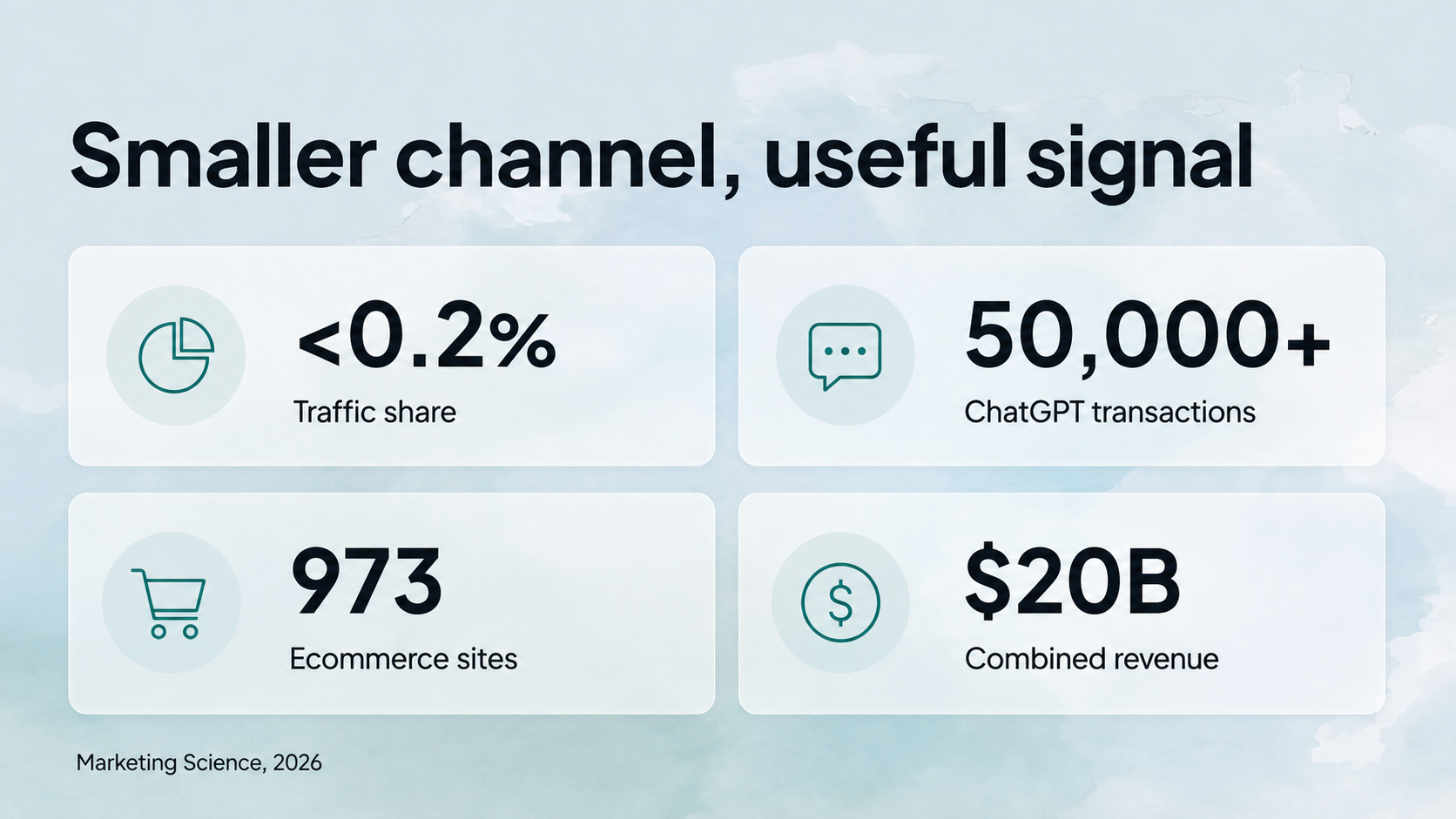
The channel is still early. A 2026 Marketing Science paper found organic LLM traffic accounted for less than 0.2 percent of visits across its ecommerce dataset. That is not a volume replacement for search. It is a signal that product discovery is moving upstream into answer engines.
Why is traffic from AI higher quality?
AI traffic is often higher quality because the assistant does pre-click filtering. The shopper asks for a recommendation, explains constraints, compares alternatives, and receives a short list before visiting a site. By the time they click, they may already know the product category, tradeoffs, and why the brand is relevant.
Adobe Analytics reported that generative AI traffic to U.S. retail sites rose 1,200 percent in February 2025 compared with July 2024. Adobe also found AI-referred retail visitors viewed 12 percent more pages and had a 23 percent lower bounce rate than non-AI traffic.
Adobe's retail data shows the core pattern: AI traffic is still emerging, but visitors who click through often browse more deeply.
That pattern fits the behavior. ChatGPT is not just sending a generic visit. It is often sending someone who asked a problem-shaped question like "which backpack fits a weekend trip?" or "what paddleboard is best for beginners?" The visit starts after the shopper has framed the buying job.
Why does AI send fewer visitors than search?
AI sends fewer visitors because many questions are answered inside the assistant. Users do not click every cited source, and some answers satisfy the need without a website visit. When AI does send traffic, the click usually reflects stronger intent because the user chose to leave the answer and inspect a page.
The Marketing Science study analyzed first-party ecommerce data from 973 websites with $20 billion in combined revenue, 164 million traditional-channel transactions, and more than 50,000 ChatGPT-referred transactions. Its headline is useful but sober: organic LLM traffic underperforms most traditional channels today.
ChatGPT referral traffic is measurable, but it remains small relative to traditional acquisition channels.
That is the wrong reason to ignore it. Small channels can still expose new buyer behavior. If ChatGPT sends only a few hundred sessions, but those sessions cluster on product pages, collection pages, internal search, or comparison content, they tell you what answer engines think your site is useful for.
What makes a ChatGPT visitor different from a search visitor?
A search visitor often starts with a keyword. A ChatGPT visitor often starts with a decision. They may ask for a shortlist, tradeoffs, sizing help, a product alternative, or a comparison. That makes the landing-page expectation sharper. Generic category copy will not carry the session.
Visit source | Common behavior | What the page must do |
|---|---|---|
Organic search | Keyword-led research | Answer the query and guide next steps. |
Paid social | Interruptive discovery | Explain the offer quickly. |
ChatGPT | Recommendation-led evaluation | Confirm fit, tradeoffs, proof, and product details. |
Internal site search | Known need, unclear path | Return specific products and answers fast. |
Search Engine Land's coverage of Previsible's 2026 AI traffic study found ChatGPT accounted for 92.4 percent of trackable standalone LLM referral traffic in that dataset. The same analysis noted that AI referrals can be volatile and that page type matters. Site-wide averages hide the pages where AI visitors actually land.
Why do AI visitors arrive with more purchase intent?
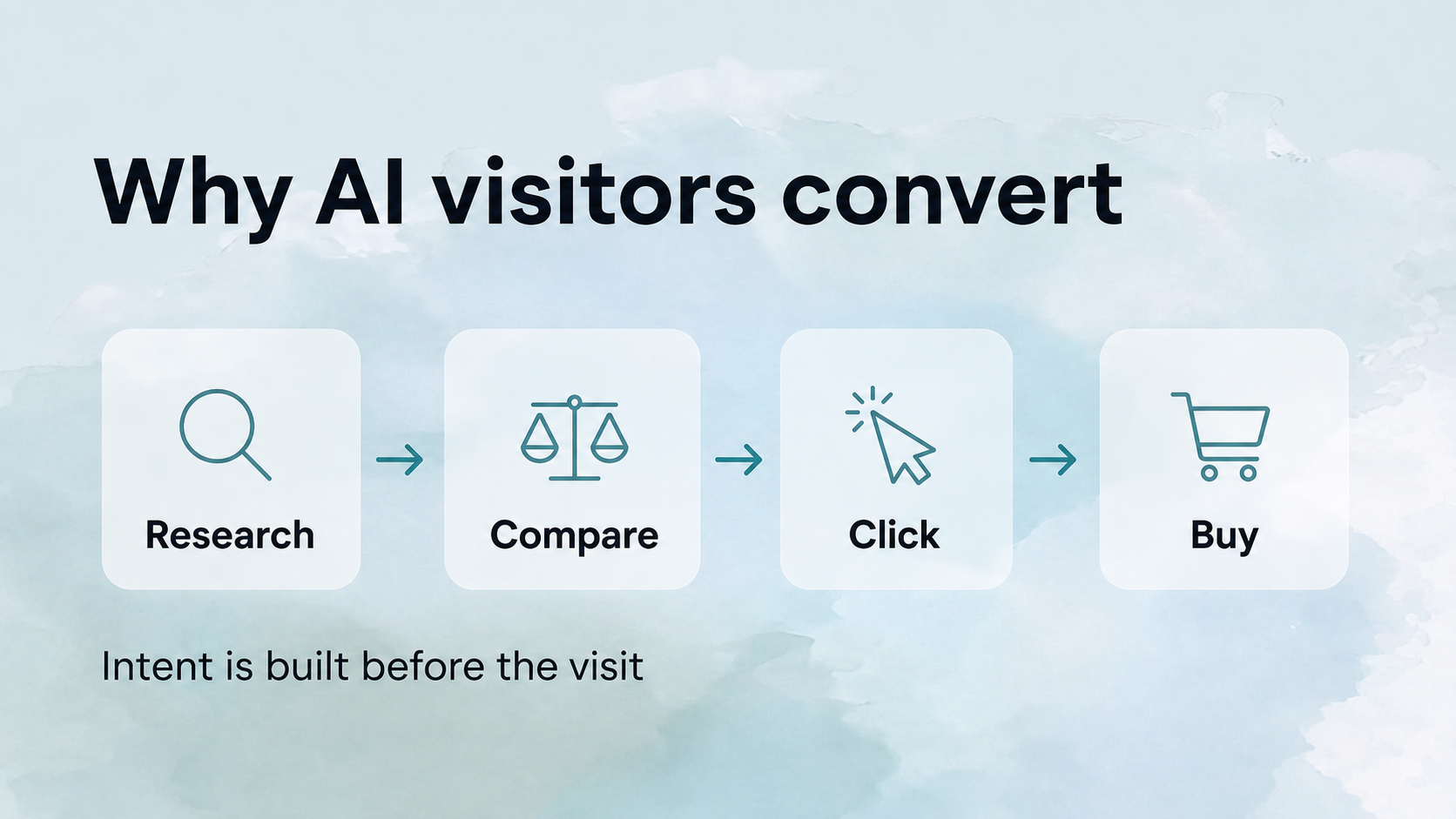
AI visitors often arrive with more purchase intent because the assistant compresses the research path. Instead of opening ten tabs, the shopper asks one detailed question and gets a narrowed answer. If your brand is named, cited, and linked, the click starts closer to evaluation than discovery.
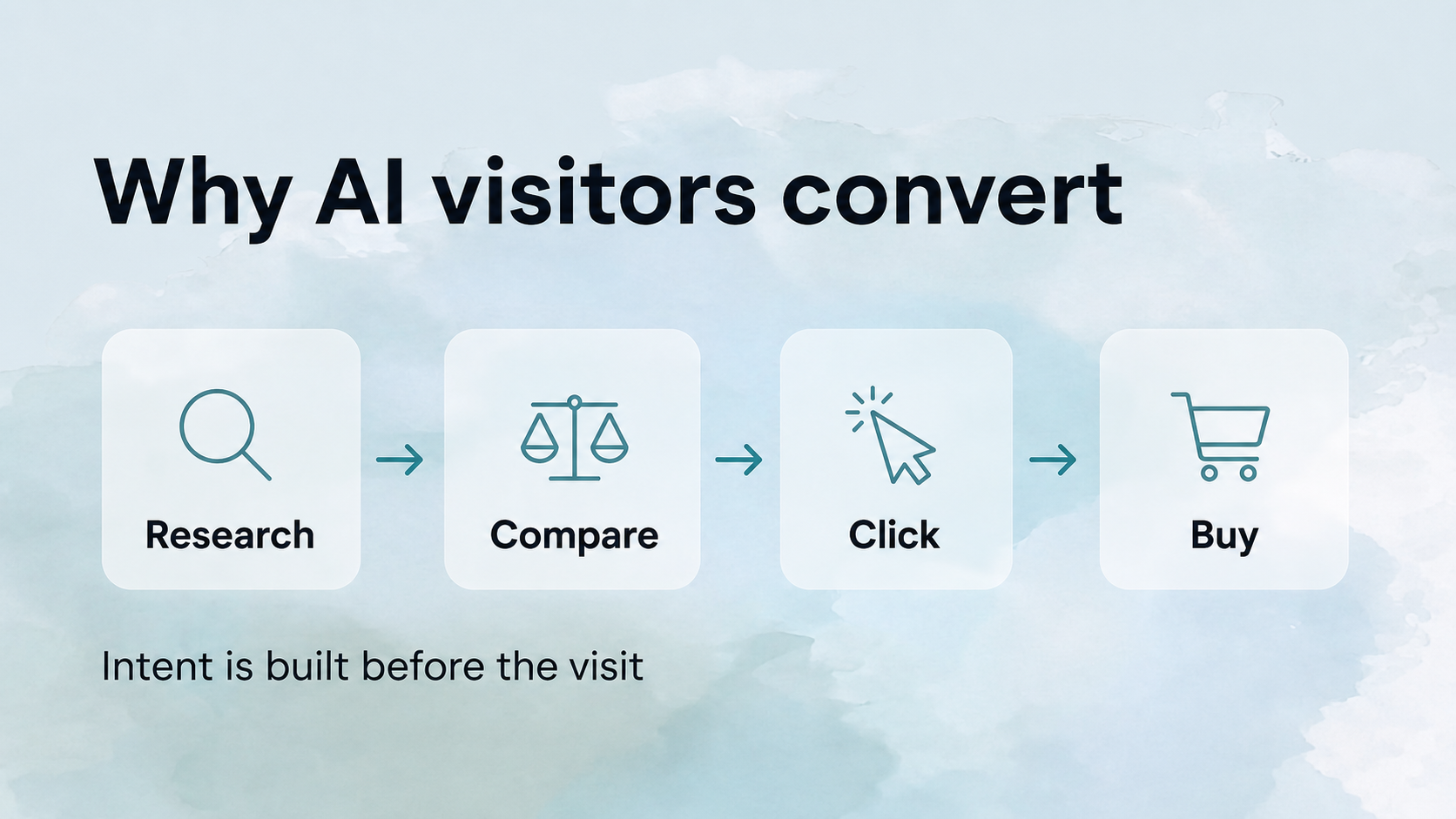
AI does more of the research before the visit. The landing page has to finish the job.
This is why DTC brands should not measure AI traffic only by session count. The better questions are: which prompts caused the visit, which products or pages received it, whether the page answered the next likely question, and whether assisted conversion shows up later.
Adobe's data also found AI-referred retail traffic was 9 percent less likely to convert than other sources in February 2025, an improvement from a 43 percent gap in July 2024. That narrowing gap matters. It suggests shoppers are getting more comfortable moving from AI-assisted research to purchase.
What pages should DTC brands fix for AI traffic?
DTC brands should fix product pages, comparison pages, collection pages, internal search results, and FAQ-style answer content. AI visitors often arrive with a specific unresolved question. The page needs clear product data, direct answers, social proof, pricing, sizing, availability, returns, and competitor context.
Page type | Why AI visitors land there | Fix first |
|---|---|---|
Product page | The shopper already has a candidate item. | Add fit, use cases, specs, reviews, and shipping details. |
Comparison page | The shopper asked which option is better. | Show honest tradeoffs, not vague claims. |
Collection page | The shopper is choosing within a category. | Explain who each product is for. |
Internal search page | AI trusts the domain but not the exact page. | Make search results useful, fast, and product-aware. |
FAQ or guide | The shopper still needs confidence. | Answer buying objections in short, quotable blocks. |
Anagram's public site shows why this matters after the click. Bote decreased traditional customer support contacts by 36 percent, Dakine engaged more than 25,000 shoppers, and Elan Pure raised conversion rates to 13 percent with Anagram-assisted sessions. Those are on-site outcomes, not just visibility metrics.
How should I measure ChatGPT traffic in 2026?
Measure ChatGPT traffic by volume, page type, engagement, conversion, and prompt context. Referral sessions alone are too blunt. Track whether AI visitors land on product pages, internal search, comparison content, or support pages, then compare bounce rate, page depth, assisted revenue, and downstream conversion.
Use a simple reporting view:
Metric | What it tells you |
|---|---|
AI referral sessions | Whether answer engines are sending visible traffic. |
Landing page type | What AI systems think your site can answer. |
Pages per visit | Whether the click produces real exploration. |
Bounce rate | Whether the landing page matched the answer. |
Conversion rate | Whether the visit turns into revenue. |
Assisted conversions | Whether AI contributes before the final click. |
Do not overfit one week of data. AI referral traffic is volatile because platforms change how they cite, browse, and link. Use prompt tracking and analytics together. One tells you what AI says. The other tells you what users do after the click.
How does Anagram help DTC brands capture AI-referred visitors?
Anagram helps by connecting AI visibility with the on-site answer experience. If ChatGPT sends a high-intent visitor to your product page, the page still has to answer the next question. Anagram gives shoppers a branded site agent that can answer product questions, guide discovery, and reveal content gaps.
That closed loop matters. Visibility without conversion is just a report. Conversion without visibility leaves demand trapped inside ChatGPT. DTC brands need both: know where the brand appears in AI answers, then make the landing experience strong enough to capture the visit.
Frequently asked questions
Does ChatGPT traffic convert better than Google traffic?
Not consistently. Public ecommerce research shows organic LLM traffic converts better than paid social but below most traditional channels, including search. The more useful point is that ChatGPT visitors can be more qualified when they arrive from specific recommendation or comparison prompts.
Is AI traffic worth tracking if volume is small?
Yes, if your products require research before purchase. Small AI traffic can reveal high-intent buyer questions, weak landing pages, and competitor visibility gaps. Treat it as an early signal, then watch whether sessions, page depth, and assisted conversions grow over time.
Why do AI visitors bounce less?
AI visitors may bounce less because the assistant pre-qualifies the click. The user has already asked a question and chosen a recommended link. Adobe's retail data supports this behavior, showing AI-referred visitors had a 23 percent lower bounce rate than non-AI traffic.
What should I do if ChatGPT sends traffic to the wrong page?
Improve internal linking, product data, collection copy, and site search. If AI trusts your domain but lands users on a weak page, the model may not understand which page best answers the prompt. Make the right page easier to crawl, cite, and choose.